The First Black Accountants - How Our Firm Rejected Accounting's Racist Glass Ceiling


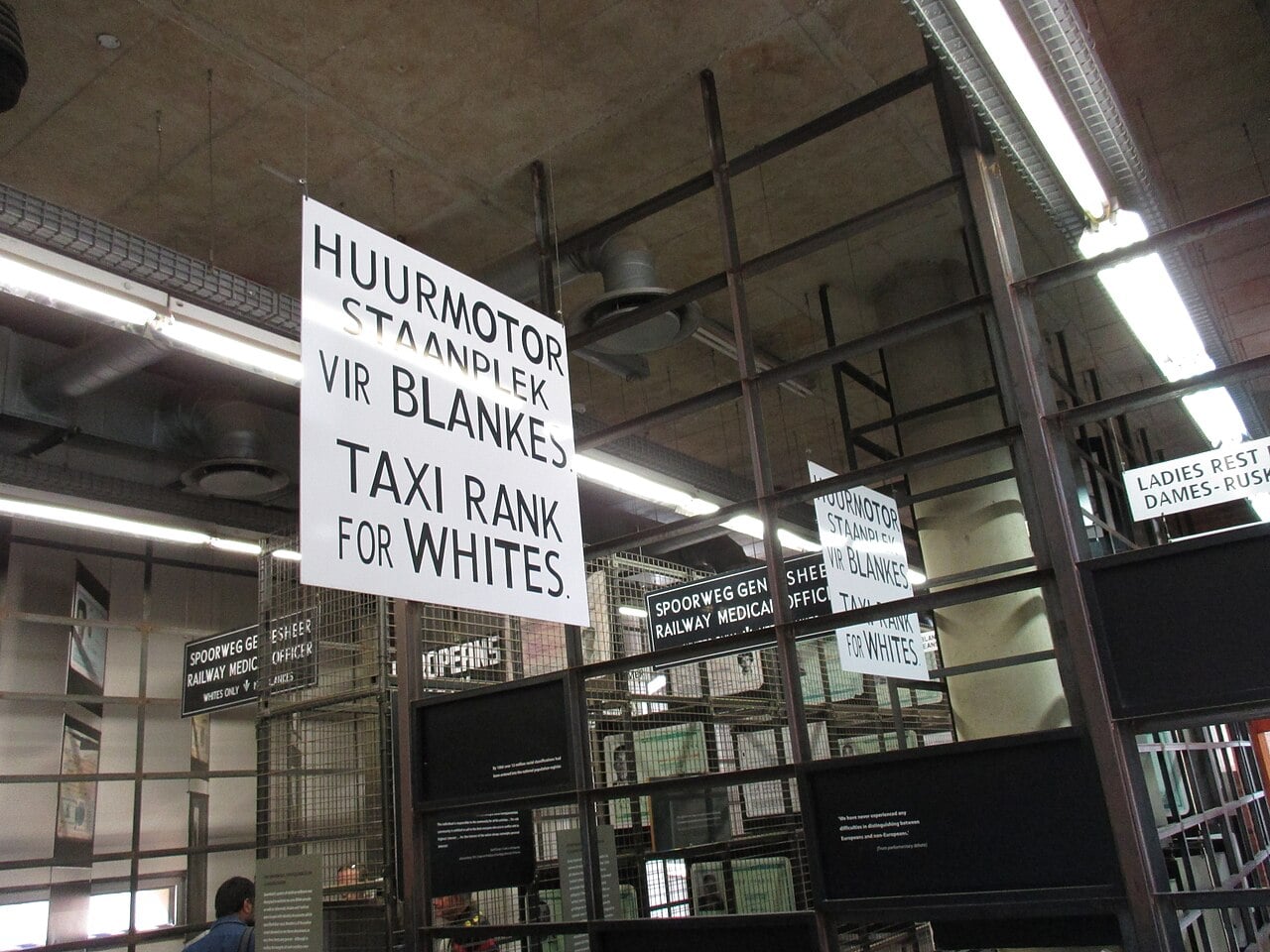
People tend to forget our proudly South African history: as a black person, you couldn’t land articles/a traineeship during apartheid.
In the 1980s, you could become a CA(SA), but you needed to serve articles, and no one would hire someone who looked like you.
But through the determination of those willing to face the challenges and envision a non-racialised financial services industry, our CA(SA)s are now more diverse than ever before.
Sitting down with my father (Mr Suresh Naidoo), the journalist/curious writer in me wanted to know: What's the story behind Gcabashe INC, and how did it become SA's oldest black accounting firm? What challenges did my dad face on his journey to becoming a chartered accountant during apartheid?
It's a crime not to share this incredible feat! Like Law & Order: SVU, these are their stories:

Gcabashe started as a firm in the ’70s. If you were black, Indian, or Coloured, you could technically become a CA(SA), but you needed to get articles. And it’s no surprise that at the time, not a single prestigious or established white-owned firm would ever give any person of colour articles. The barriers for black people were innumerable.
But two of the founders of Gcabashe found a way. The first South African Indian Chartered Accountants were Mohammed and Manjee. Two of them went to the UK and qualified. They returned, wrote the conversion exam in South Africa, passed, and founded the firm.
That’s how Gcabashe started getting people into the system.
Did you know? According to SAICA, Professor Wiseman Nkhulu is South Africa's first black chartered accountant. In an interview, he opened up about the struggles of studying at UCT - being the only black individual in his class and unable to actually live in the City of Cape Town, as non-white people were legally not permitted to live in the city during apartheid.
On LinkedIn, he is currently Patron and Chairman of UJ’s Wiseman Nkhulu Centre for Innovation, Thought Leadership and Governance (WNCIG).
But the firms that took black Africans trainees weren't major international companies; it was the local Afrikaans firms. Only after that, did the big 4 firms start accepting people of colour. In fact, of all the big firms, Deloitte was the first, and was one of them.
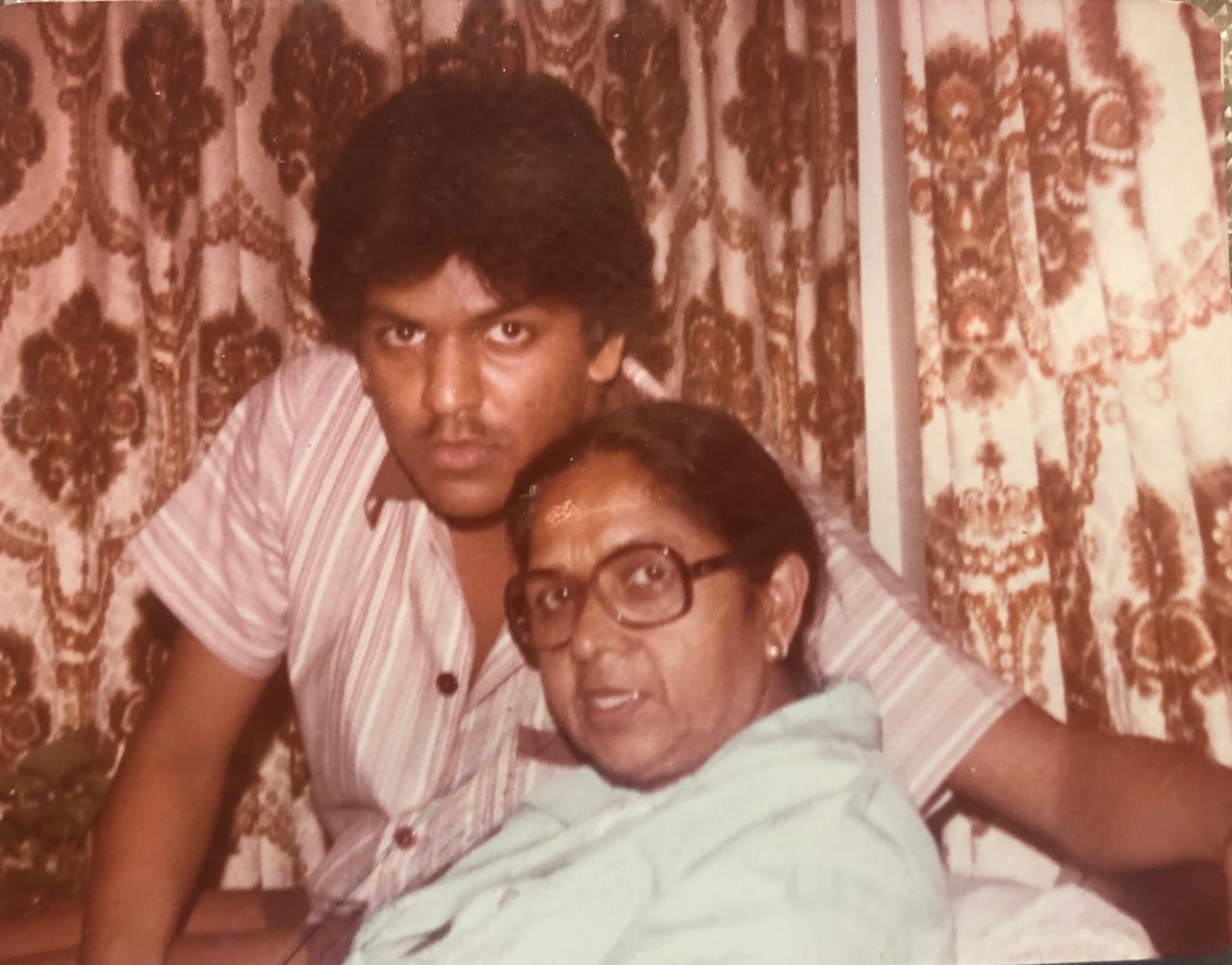
I started my audit training at Deloitte in 1988.
It was a difficult time in South Africa for people of colour. Hardly any of us could work in those big firms. But because of my academic record, Deloitte took me as one of two Indians and one African; That was the intake of non-white people for that year.
Articles were difficult. A lot of the issues I faced, had to do with cultural differences. And the fact that I’d never worked in an environment with only white people—any white people, for that matter.
Growing up during apartheid, I went to an Indian university (University of Durban Westville) and an Indian school (Gandhi Desai), so this was a shock to my system.
Reflecting on the end of my trainee days, I have to commend my experience at Deloitte; it was excellent.
I was involved with some really good clients. You had to toil away, but they had some really eye-opening clients in Durban. They were the leading firm, head and shoulders above the rest, so we got Johannesburg-equivalent experience at the time. Deloitte was great for my career. I moved up to senior auditor, and I left at the end of my articles, when Deloitte Haskins & Sells merged to become Deloitte & Touche.
I joined a Deloitte client I audited: Robertson’s Spices, now part of Unilever. Robertson’s was an FMCG (Fast Moving Consumer Goods) company. I was very interested because of my background and my family's history in trading stores. I enjoyed the Robertson’s work environment. I learnt a lot about manufacturing and distribution. And at the end of the year, I was promoted from project manager to company accountant.
The company accountant resigned, and I took his place, but he came back into my life (I’ll talk about him later).
At Robertson’s, I hit a glass ceiling: the environment was nice and the manufacturing interesting, but there was a point where a person of colour could go, and no way beyond it. And I realised then that you have to take your destiny into your own hands to make progress in a very white corporate world.
So I left and joined someone with a one-person firm with five employees. I became the sixth employee. So it was two partners and five staff. That firm did small audits and accounting work for family-owned businesses and professionals, just a smaller scale than Accensis. The firm eventually grew to three partners and probably nine or ten people. Then, with another friend of mine, it became four partners, and we grew to about 20-25 people at that time and kept growing.
In 1996, the then Minister of Public Works, Stella Sigcau (whom I had the pleasure of meeting), said that Transnet should share audit work with black firms. My partners and I were part of ABASA (Association for the Advancement of Black Accountants of Southern Africa) and we formed the ABASA Practitioners Forum. We were granted half of the Transnet audit in the second half of the year, which was already difficult for the existing auditors, who were the big firms.
Despite the giant (big 4) obstacles, we “gangstered” our way into that audit, and it changed all those firms.
All of our respective companies grew. We brought on a lot more people. We employed a lot more people. While we were in the ABASA Practitioners Forum (APF), some firms in that group combined. Our firm, which was ISP, combined with M. Brey from Cape Town and KMMT from Johannesburg to form KMMT Brey. We had offices in Durban, Johannesburg, Cape Town, Kimberley and Port Elizabeth.
We launched in every city, and we seemed to be one of the bigger black firms. Thus, we became the biggest.
But within the APF grouping, Sizwe Ntsaluba and Gobodo also merged. Those two firms are now part of Grant Thornton. KMMT then went on to merge with KPMG. The KMMT Durban office I managed had about 45 people, very close to Accensis's size now. And that firm, the Durban, Joburg — not the Cape Town, PE — merged with KPMG. I became a partner, and then joint managing partner. KPMG wasn’t well run in Durban, and so within a very short time I became the only managing partner, and that was within, like, months.
And then KPMG was a Big Four firm. During my time there, we merged with — we really took over — Andersen, which collapsed after the Enron scandal. We took over Andersen, which had a strong tax practice. Then, we became a slightly bigger firm, KPMG. We were the third-biggest in South Africa.
I did internal audit work, but I also sat on the Policy Committee, KPMG South Africa's supreme governance body. I decided who became a partner and who didn’t, and I made financial decisions. And so all the big decisions were made by the Policy Board. And I sat; as long as I was in KPMG, I was elected to that position. It’s not a nominated position.
The partners elected me. The biggest were still Deloitte, PwC, KPMG, E&Y, and then Andersen merged with us. We stepped up a bit. KPMG was also a difficult environment. The work was not difficult, but the culture was very difficult, very white, very racist and anti-any change.
Our partners who went in—and even though a KMMT partner became the CEO after I left— the organisation's culture didn’t change much. I reached a point where I told myself, “This is the end,” and thought things would get better after that.
I joined Deloitte as a partner. But I hit that same glass ceiling again.
That led me to buy a very small firm of four people, because I always believed starting with nothing is much harder than starting with even four people.
This was Pierian ZA. We grew to about 17 people, and I admitted a partner, Vanesan Govender. It was just the two of us, and we ran quite well. Unlike today, we focused on accounting and outsourced non-core services for our clients.
But auditing came to us because those who knew me personally reached out. So we did audit work, but we focused on doing something different.
Then, in 2014, we joined Gcabashe, South Africa's oldest black firm, formed in the ’70s. Their partners (one retiring and one emigrating), so we took over the practice.
They were almost the same size as us in terms of headcount, and we merged in 2014. And then from there, the firm has grown to — at that point, we were about 37 people.
But a merger is never easy, and the gaps in how the firms were run and in their culture were so wide that it took a lot of effort to fix.
The Gcabashe partners wanted to keep the name. I said,“Gcabashe is gone”. He’s actually dead, and I knew him quite well.
He’s gone, and I felt It’s not right to use a black name when you’re no longer a black firm.
Let’s do something that doesn’t carry race, gender, or anything like that. It must just be a name.
We came up with Accensis.